Tag Archive for: Leadership Coaching Training

Setting the Tone for Success in 2024

Goal Setting and Planning:

If you have not already communicated your goals for 2024 to your team, it is time to do so. I cannot emphasize enough the importance of setting clear, measurable, and achievable goals for yourself, the team and individual employees. As important as it is to have professional goals, your personal goals should hold equal weight. I do this exercise annually and revisit the goals quarterly to check in on progress made and determine if a pivot needs to be made.

Key Takeaway: Regularly revisit and adapt goals to align with your evolving priorities and aspirations.

Building Resilience:

Resilience is a crucial leadership trait in our current political and economic climate. Consider sharing strategies for building resilience in the face of challenges, such as promoting a growth mindset, fostering open communication, and providing resources for managing stress within your team. Highlight the importance of empathy in supporting employees’ well-being during uncertain times.

Key Takeaway: Promote a resilient mindset by encouraging your team to view challenges as opportunities for growth.

Remote Team Management:

Roughly 50% of my clients are remote workers globally, and with remote and hybrid work becoming the norm for many, providing specific tools and techniques for leaders to motivate and engage their remote teams is top of mind. A focus on maintaining team cohesion, leveraging technology for seamless communication, and fostering a positive remote work culture is required to lead a successful remote team.

Practical Action: Implement practices that enhance team connection and well-being in the virtual work environment.

Professional Development:

Prioritize the professional development of your teams in 2024. Share resources and strategies for providing ongoing learning opportunities, coaching and mentorship. Consider incorporating insights, identifying individual development needs, and creating personalized development plans to help employees grow and thrive.


Reach out today to learn more about how Jenny Reilly Consulting can help you with your 2024 goals. You can book a complimentary 30-minute  consultation.  Or, please email askme@jennyreilly.com to coordinate a convenient consultation time.

How to Deliver Your Key Message in Under 3 Minutes

As leaders, effective communication is paramount, and this month, I invite you to take on a challenge: deliver your key message in under three minutes.

Our various devices train us to cut through the noise, and our patience and attention span have become shorter. As a rule, try to get your core message across in any forum you work in three minutes or less. If you can do this, you will captivate your audience (internal or external stakeholders, clients, colleagues etc.), they will want to know more, and you will leave a lasting impact.

Craft and structure your core message with a hook, then explain the impact and value to the audience. Your objective should be to provide a compelling ‘aha’ moment and a clear path to fruition.

Embrace your nervous energy and let it sharpen your focus. Tailor your message to resonate and be audience-centric for a more significant impact, and then prepare and practice. Understand that you will have to remain adaptable during your presentation to meet the needs of your audience and be ready to pivot to address identified interests and concerns effectively.

When we present authentically, our personality and style are evident. By being authentic, you will build credibility and trust with your audience. When knowing your content, you don’t need a script. You can speak from a well-prepared outline which will help you overcome the temptation to read word for word and enable you to maintain a natural flow while highlighting key points effectively.

There is real power in your non-verbal communication and body language. Your body language needs to enhance your message, not detract from it. Practice mastering your non-verbal cues so you can see the influence of your body language on what you are saying.

When you are working out what to say in the first three minutes, think of these questions to help guide the points you want to get across:

  1. What is it you want to say and why?
    This will help you conceptualize what it is you are getting at.
  2. How does it work, or how will it help? 
    This will help your audience form a process map for utilizing the information you are sharing.
  3. What is the proof or accountability statement?
    Facts, figures, and proof of what you say must be referenced or provided.
  4. How can you help?
    Define how you can be of assistance, help or reference.

Prepare and practice for impactful communication. You can captivate, influence, and inspire your audience in three minutes. Remember, authentic and concise communication leaves a lasting impression. Step up to the challenge, and watch your messages resonate like never before.


7 Point Message Delivery Cheat Sheet

  1. Being a little nervous is a good thing. It will give you the adrenaline to be more alert when giving your message.
  2. Intently craft your message for your audience. Who is your audience? What choice of words and level of detail will work best? Answering these two questions will help you organize your key points correctly for a more significant impact.
  3. Focus on the audience. Even with practice, when the time comes to deliver your message, if the audience wants something different, you need to quickly pivot to what they need, or they will lose attention.
  4. Be yourself – authenticity is key. Let your personality shine when you present, giving you credibility and audience trust.
  5. Speak from an outline, not a script. When nervous, we tend to look down at our note sand read word for word. I encourage you to initially prepare by writing out all you want to say and practice your presentation verbally until you feel confident and then condense your presentation notes into an outline of only key points. Again practice, and you will find that speaking from an outline will enable you to be more natural in your presentation.
  6. Use body language. Not only are your words and tone powerful, but also your non-verbal’s. You want to ensure your body language does not detract from your core objectives.
  7. Nothing can replace preparation and practice. Review your outline and practice out aloud (yes, in front of a mirror, or tape yourself on Zoom and rewatch to critique yourself) until you feel confident in your verbal and non-verbal message delivery.


If you have any questions about drafting and delivering your key message, or want to learn more about the powerful benefits of executive coaching to elevate your leadership success, please reach out to askme@jennyreilly.com and book a complimentary 30-minute strategy session.  If you want monthly leadership tips, sign up for my JRC newsletter.


Jenny Reilly Consulting, Vancouver Executive Coach

Leadership Tools For Your Day-To-Day

I am sharing two leadership tools with you to help you focus on your role.

  1. A brief questionnaire to help you identify your leadership focus.
  2. A self-ranking assessment to assist you with your core leadership activities.

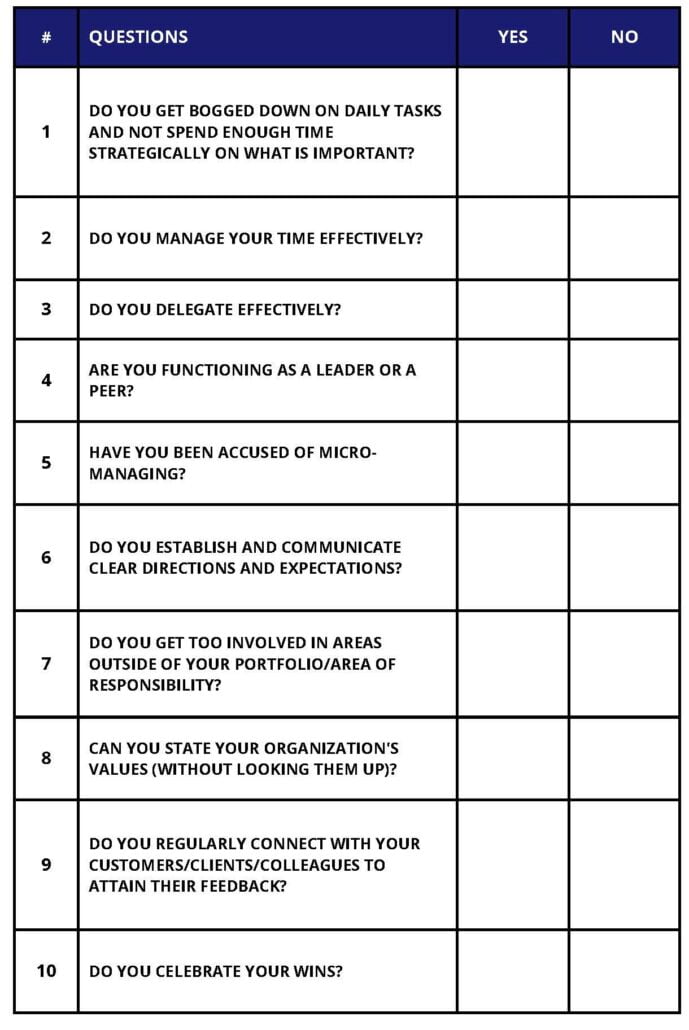
Tool 1: How is Your Leadership Focus?

STEP 1: Answer the following ten questions in the questionnaire below with a yes or no answer.

STEP 2: Prioritize your ‘yes’ answers in order of what would help you most in your role if improved.

STEP 3: Select the top three, and list one thing you can do in each area to improve. These are your top 3 areas to focus. Implement these actions into your schedule to follow through to ensure improvement.

Leadsership Tools - Questionnaire


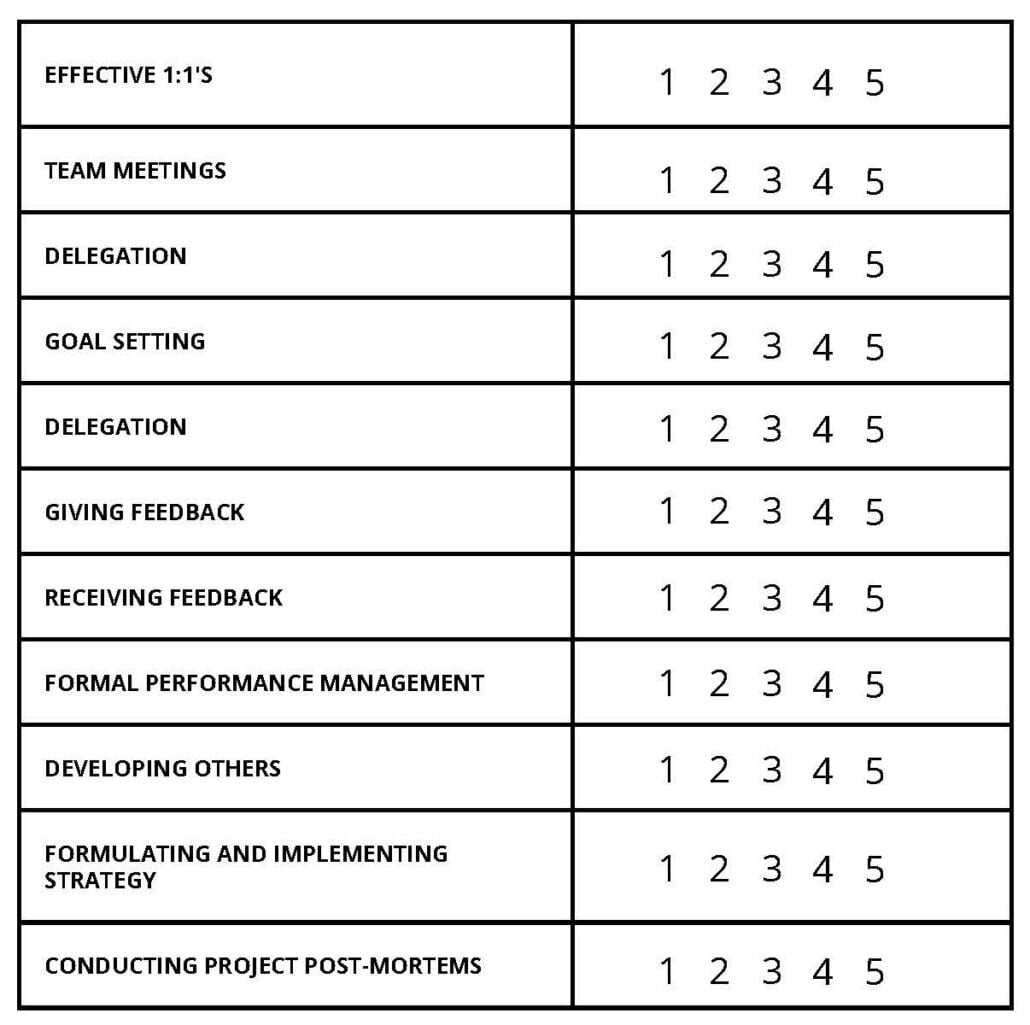
Tool 2: Your Core Leadership Activities

Leadership requires continual development. Competencies can be strengthened when managing yourself and your team and supervising managers, leads and senior leaders.

HOW DO YOU RATE YOURSELF ON YOUR CORE LEADERSHIP ACTIVITIES?

Step 1: Rate yourself on a scale of 1 (being low) – 5 (being excellent) on the following.

Step 2: In areas where you are rating yourself low, prioritize improvement for next month.

Leadsership Tools - Core Activities


If you have any questions about these leadership tools or want to learn more on the powerful benefits of executive coaching to elevate your leadership success, please contact us, or reach out directly to jenny@jennyreilly.com and book a complimentary 30-minute strategy session.


Leadership Inner Circle

FIVE CORE LEADERSHIP TACTICS

There are five leadership tactics that I follow that help me in my consulting practice. I encourage you to think about how they could help you in your position.

1.) Planning Backwards:

Focusing on the future and planning backwards is an effective leadership tactic. It encourages unconstrained thinking and disruptive ideas and will help you to propel your organization forward. Once you have a focused vision, align your people to engage on goals, and develop a comprehensive action plan to move forward.

  • Where do you want to be professionally and personally one year from today?
  • What do you need to do to get there? (Of your action items, prioritize them in sequenced order and develop an action plan on what is required in each step.)

2.) Purpose-driven and value-focused:

My consultancy purpose and values determine my guiding principles. If you have not listed your guiding principles, it is time to do so. Your guiding principles outline how you operate, the organization’s role and the individual within. 

  • What is your company vision, purpose statement/mission, and what values define how you do business? 

3.) Intentionally listen actively:

Leadership is a conversation. Improving your listening ability will be a cornerstone of your leadership success. Listening will assist you in problem-solving, determining and implementing innovative ideas, defining process improvements, and developing new ideas for faster and better outcomes. Engage your team, clients/customers and external stakeholders in a discussion on progress once modifications have been agreed upon, design and circle back to question if you have it right. 

4.) Innovate continually.

You cannot afford to become too comfortable and complacent. Customer and client preferences in the product or service area you are offering are continually changing. Technology advances will improve speed and results, can transform our processes, and adaption of best practices. Quarterly question processes, this will help you retain focus on improvement and will become part of your culture. Encourage bottom-up and top-down idea initiatives for improvement. Make decisions faster and base them on data with a focus on quality. Quarterly, prioritize the top three areas you can innovate to bring the greatest return to your organization. 

5.) Performance – think short and long-term.

To thrive in the long term, we need to have not only long-term goals but also short-term goals to gain momentum. Future-proof your performance by answering the questions below: 

  • What trends are influencing your business and sector?
  • What are your customers and clients seeking or asking that is not currently being provided? 
  • What is your data telling you? The facts have the answers. 
  • Ask your employees for feedback on what is working and what isn’t and any suggestions they have for improvement.
  • What are your duties and responsibilities – are they aligned with your purpose? 
  • Assess how you are doing things, is it the best and most effective way, or have you fallen into a routine and repeated past actions hoping for better results? 

If you have any questions about leadership tactics or want to learn more on the powerful benefits of executive coaching to elevate your professional success, please reach out to +1 604-616-1967 or askme@jennyreilly.com and book a complimentary 30-minute strategy session. If you want monthly leadership and professional development tips, sign up for my JRC newsletter or check out my social media on Instagram for information on my new upcoming 6-month executive leadership course.

HOW CAN ‘DEEP WORK’ GET YOU BACK TO DOING AN EXTRAORDINARY JOB?

Do you want to do your job or do an extraordinary job?

There are times when we run on all cylinders, everything comes together, and we feel like we are at the top of our game. In contrast, there are times when we may feel we have lost our work mojo, are bored, stagnant, and just go through the motions of our job. I know how I prefer to feel, how about you?

A tool to help you regain focus on what you are doing and how you are doing it is to ensure you immediately implement ‘deep work’ time into your schedule. This mode helps you have an uninterrupted focus on a significant task.

Your ‘deep work’ time should be allocated to projects or tasks that require your undivided attention to move forward and will have the greatest impact. This sounds so straightforward and obvious that you may ask why I even need to write about this, so I challenge you to look at your schedule over the past month and honestly evaluate how much time you allocated to ‘deep work.’

When you allocate time in your day where you can work in isolation, without distraction, the quality and quantity of work you can complete can be extraordinary. It takes time, focus and persistence, but it will be worth it.

Reorganize your month ahead to ensure you have time in your schedule daily for ‘deep work.’

Your days maybe spent, rushing from one meeting to another or putting out continual fires – this is fractured work. Fractured work occurs when you are primarily responding to others’ needs and requirements. It is unrealistic to think that you can cut out fractured work in your day-to-day commitments; however very realistic to combine it with periods of uninterrupted focus.

To do extraordinary work, we need periods of concentration and focus.

Determine how much ‘deep work’ time you need daily, schedule it, and make it a non-negotiable priority for the month ahead.

QUESTIONS FOR YOU TO ANSWER:

  1. How can I schedule my time in September so five days per week, I have at least one hour daily allocated to ‘deep work’?
  2. Are there any periods in the year that I need more time to focus on ‘deep work’? If so, when? Now go ahead and block off that time in your schedule.
  3. What will you have to do in your space to ensure it will promote ‘deep work,’ or where else can you go to facilitate ‘deep work’?

EFFECTIVE ONE-ON-ONE MEETINGS WITH DIRECT REPORTS

Having effective one-on-one meetings is a critical leadership skill. I recommend having weekly one-on-one meetings with each of your direct reports. The objective of this meeting is to ensure there is open and transparent communication on priorities, identification of opportunities, issues or challenges and time to address any questions or concerns that may be affecting the progress of your direct report.

To have effective meetings, ensure you have a plan, are organized to optimize your meeting time, have clear outcomes in mind, and record who is responsible for what by when, making it is easier for you to follow up.

The following are an example of questions that you could ask in a one-on-one:

  • What were your biggest wins over the last week/since we last met?
  • What worked well, what didn’t and why?
  • Are there any areas in that I can support you?
  • What are your top three priorities for the upcoming week?
  • Is there anything else that you would like to cover today?

I encourage you to monitor how much you talk in these meetings. My suggestion is that you should not be speaking for more than 20% of the meeting. Focus on listening, not jumping in and solving problems but asking clarifying questions.

MEETING TIPS

For many, meetings are painful, and I am sure you have felt, heard, or empathize with the following:

‘I have too many meetings.’

‘The meetings are too frequent and too long.’

‘Meetings are a waste of my time.’

‘I hate it when people show up late or don’t contribute – why bother!’


Here are some helpful tips for you:

  1. Look at the meetings in your schedule over the upcoming week and determine if your attendance is necessary. If it is not, message the organizer with your rationale and withdraw yourself from attendance.
  2. When scheduling a meeting, ensure that the right people are in attendance and the duration is the correct length (the shorter, the better).
  3. If you are organizing or chairing a meeting in advance, prepare and circulate an agenda along with any documents that need to be reviewed.
  4. Follow up on your meeting notes, complete what you said you would and hold others accountable for assigned tasks.

Speak up on annoying behaviours like:

  • Individuals being on their phones during the meeting, checking emails, social or surfing
  • Arriving late and being disruptive
  • Interrupting and talking too much
  • Not coming prepared
  • No participating

Each behaviour is a sign of disinterest and disengagement, don’t ignore it. Be focused on acknowledging it and changing the behaviour.

If you have any questions about implementing deep work times in your schedule or want to learn more on the powerful benefits of executive coaching to elevate your professional success, please reach out to +1 604-616-1967 or jenny@jennyreilly.com and book a complimentary 30-minute strategy session. If you want monthly leadership and professional development tips, sign up for my JRC newsletter or check out my social media on Instagram for top leadership advice throughout the year.