Waiting for things to return to normal? Stop waiting, instead hit the reset button!

Last week, I was in a meeting where we had a great discussion on leadership modes and the stressors that have been present over the previous six months in various industry sectors.


We moved into ’emergency mode’ overnight, working at double speed to address either challenges or opportunities in the marketplace as a direct result of the global pandemic. Improvising and experimenting along the way. Then came the ‘resilience mode’ as we pivoted, offered differentiated services, changed the way we interacted with our customers and clients, all the time adjusting to adapt to our new reality. This phase has been intense, has lasted longer than expected, and the stress during this period has been consistent and high.

 

Adaptive Leadership

The importance of fostering adaptive leadership in this period of economic recovery is critical for long term success. The need to perform in an everchanging environment of uncertainty, as proven during this period of COVID, has reminded us to continue to focus on execution, while at the same time developing ‘next best practices’ that will work more effectively in our fast-paced changing professional environment.


Being adaptive to such wavering market conditions in many ways has enabled us to get back to the basics of focusing on our people first and foremost, delivering value and good work for your clients.


Being adaptive is essential when planning for the unknown, forecasting worst- and best-case scenarios, and preparing for alternate situations. Working in this constant state of flux is exhausting, and rather than operate at 110% continuously, you will be better served to operate in sprints and reserve your energy. Focus on what can be completed in 30, 60- and 90-day windows. Be proactive in navigating strategic ambiguity, take pragmatic action, stay informed, use your data points, and keep your communication open and transparent


Keeping up – remember focus takes personal attention

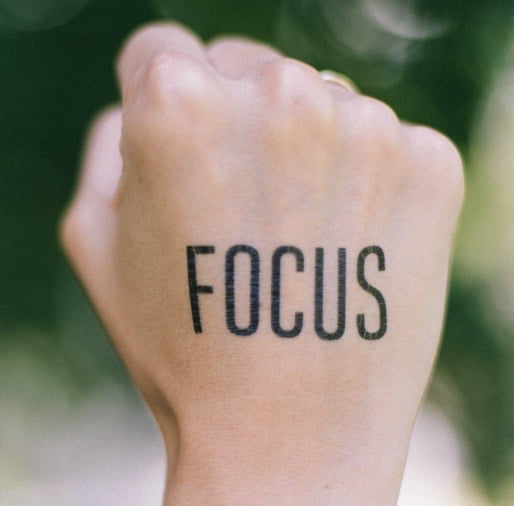
Being adaptive professionally requires intentional focus. To maintain this edge, your ability to critically and appropriately respond to a situation, while keeping your presence, thinking and emotions in check is crucial to your success. You will be able to do this better if you take care of yourself. Yes, the simple rules of getting enough sleep, eating well, exercising and ensuring you are getting enough social and emotional stimulus. Some questions for you to consider:

  • Are you taking care of yourself physically and mentally?
  • If you are working remotely, who are you reaching out to (coach, confidant or colleague) for support in your role and how often?
  • Are you turning off and disconnecting from your phone and email at least one day per week to allow for rejuvenation?
  • Are you blocking off time in your schedule to reflect on weekly accomplishments, items that need to move forward and the focus required in the week ahead?

Embrace ‘the fail.’

Having and executing a plan does not necessarily mean it is going to be successful. A failed plan is a better plan than no plan at all. After a failed execution of an action, we can pivot, correct and improvise as we have a strong foundation to move from. Being resilient after a failure, consistently pushing forward, and making changes as needed will help you on your journey to attain your desired results.  Thinking on your feet, analytical problem solving, fast decision making, and clear and consistent communication on the direction are all critical attributes of a leader. Caring and placing employees as the number one priority in a period of crisis is not forgotten. I have heard numerous clients’ stories over the last six months how the pandemic and change in working conditions have bought them closer, even though they are physically apart. Consistent communication and forwarding thinking action have improved relationships and, although different in many circumstances, are more robust than they have ever been.


Hit the ‘reset’ button

Hitting the reset button helps you look at your current situation, build on knowledge from recent experiences and redefine the way you work. Providing leadership direction in an environment when uncertainty has been the only given has provided an excellent leadership growth opportunity. Addressing issues with short-term fixes, tightening or cutting resources, and freezing hiring even during a period of growth (which has been for some sectors) may have worked to date; however, I encourage you to take a step back and hit the reset button.

Reset by evaluating how far you have come over the last six months, identify where you want to be by the end of the year, a year from now, and identify action items required to get there – be proactive in planning your roadmap for success.


We can help you with your professional development or provide tailored executive coaching that can help support your leadership or your leadership team, please reach out to askme@jennyreilly.com to schedule a convenient time for a complimentary strategy session.

Get your leadership strategies and tactics in my monthly newsletter, sign up here to subscribe.

Leadership from 10,000 Feet: A Bird’s Eye View of Your Business Can Change Your Practices

SKYDIVING CHANGES PERSPECTIVE: Changing Your Business Outlook

Last month, I went on a Tandem Skydive; the last time I had done this was 29 years ago with nine work colleagues and friends in Australia. Fast-forward to 2020, where my 18-year-old son and one of his friends were talking about Skydiving. I shared that I would love to do it again with them and, and before we knew it, there were seven of us going along for the thrill, including my daughter.


Ironically, I had been talking to my kids about my desire to cross something off my bucket list this summer as we could not travel nor go back to Australia for our annual family visit. I had romanticized about having a Vespa; however, my children did not like the idea of their 52-year-old mother (and I must admit not the most coordinated individual) riding a Vespa around Vancouver and thought that it was far too dangerous. At the back of my mind, I thought if I could show them that I could jump out of a plane, that they would be a little more comfortable with their mother on a scooter. Wrong! Now you may wonder why I am sharing this story. What has jumping out of a plane or riding a Vespa got to do with leadership? Well, let me explain and put this into perspective for you… note the word choice ‘perspective’.


PERSPECTIVE MATTERS


Over the last five months, we have all been challenged in how we look at life professionally and personally as we navigate through the effects of COVID19. Professionally my perspective on how I operate my business, to how I provide my consulting and coaching services to my clients, to personally how I interact with family and friends has shifted significantly. My perspective on my professional and personal priorities, where I am focusing the majority of my time, and my desire to enjoy opportunities (that I can coordinate through a period of social distancing) has changed.


So, let me get back to Skydiving. Some of you may be familiar with the cliché leadership phase that was used extensively in the early 2000s, around the proverbial ‘30,000-foot view’ that leaders were encouraged to take in their positions. The 30,000-foot reference is that of the typical cruising altitude of a commercial jet. Productivity guru Dave Allen popularized this aviation reference to remind leaders to focus on what they needed and wanted to accomplish within 12 -24-month period, and the productive action required to make it happen. I have taken the liberty and tweaked the 30,000-foot reference to make it 10,000 feet, that of which our plane was at when we did our Tandem Skydive. At 10,000 feet looking down, it is a great visual reminder to look at the bigger picture (professionally and personally). At 10,000 feet, the details below are clear, and you cannot get ‘stuck in the weeds, (meaning details or complexities) as you can’t even see them. Even when going through a cloud, there is a short period of full enclosure, and then when you come out the other side all opens up– much like what happens continuously on the professional and personal front through life.


COVID CHANGED THE GAME

In this time of COVID, we have had to spend considerable time in the weeds; by that, I mean the day-to-day tactical operations of our businesses to ensure we get through this challenging time. In Vancouver, we are now six months into the pandemic, and at this time, fearful of rising numbers. We mustn’t lose sight of our big picture vision; this is essential to stay on track. Having a 10,000-foot view is helpful as we can build on existing practices and processes and determine additional measures that may need to be put in place to navigate a looming second full lockdown. Continual focus on how we provide value to our clients, support our employees, and focus on the long game of the business is required. Looking at your business from a 10,000-foot view enables you to evaluate internal capabilities, potential challenges, opportunities, and put a road map for success into place that will help you determine what action is required to get to your destination.


How will you clarify what needs to be done in critical areas of your business, ensure objective focus, or look at issues like:


  • Communication Challenges
  • Human Resource Constraints
  • Leadership Issues
  • Operational Changes, or
  • Process Optimization Strategies

EVALUATING A SITUATION: Different Perspectives

The objective evaluation of a situation enables us to gain clarity from all perspectives. How we gather information, evaluate data, conduct a S.W.O.T. (strengths, weaknesses, opportunities and threats) analysis and determine potential tactics that could be implemented to alleviate stressors can have a significant impact on our business. Evaluating the state of our business enables a better plan, comprehensive consideration of opportunities and challenges, and helps put in place plans to avoid threats to the business. Measurement and analysis of your numbers help define how you can improve every aspect of your business.

A BIRD’S EYE VIEW of Your business

So just as I had the opportunity to have a bird’s eye view of what was around me at 10,000 on the Skydive, how will you ensure you get an objective view of your business situation and learn from it? From efficiencies to profitability and sustainability during a challenging economic period, this reality check helps you lay the stage for the work needed ahead and the determination of core areas of focus. Leadership, like Skydiving, requires trust, tenacity, courage, and a willingness to take a giant leap.


I encourage you to:

  • Look at your business situation with a fresh perspective
  • Determine critical factors for both success and failure
  • Evaluate how you can improve and drive business outcomes to help you move faster towards your goals
  • Take on new challenges with enthusiasm
  • Readjust your schedule to focus on your strategic focus
  • Demonstrate tenacious courage, and be relentless in your commitment to action to move forward.

BUSINESS CONSULTANCY IN VANCOUVER

If you are interested in connecting to learn more about how Jenny Reilly Consulting can help you assess where you are strategically, regain focus, or how to move forward towards your goal attainment, please reach out to askme@jennyreillyconsulting.com

VANCOUVER SKYDIVING

In closing, I would like to shout out to the fabulous owners and staff of Vancouver Skydiving https://www.vancouver-skydiving.bc.ca If you have had Skydiving on your bucket list for a while, why wait any longer go for a jump! Skydive Vancouver did a phenomenal job of ensuring that we followed strict COVID safety protocols during our flight up to the jumping altitude, as we were strapped onto our instructor through the whole jump, through freefall to under the canopy and landing.


Breaking the Inertia and Old Workplace Systems

Breaking the Inertia of Current Life

The implementation of transformative business practices and increased digital processes have been a direct result of COVID-19. At breakneck speed, a significant change has occurred in the way we work, and it is frankly long overdue. The traditional workplace systems have pivoted, and as employee safety continues to be our priority, we have transitioned to remote, or hybrid models and become proficient in videoconferencing, adopting better methods of communication, task tracking, and collaborative team practices.

Current Economic Environment

We know that it has understandably not all been smooth sailing through COVID; however, people and companies have adapted by changing their workplace systems. We will continue to be in a state of flux until a vaccine is available and need to ensure that we implement sufficient measures to retain and improve our company culture for our employees. Many employees miss the in-person day to day interaction, helpful side-bar conversations, and the energy that comes from working in a physical space together. On the flip side, McKinsey’s research has indicated that ’80 % of people questioned enjoy working from home. Forty-one percent say that they are more productive than before and 28% that they are as productive.’


Workplace Systems

What To Do Now

It is now time to focus on rethinking the way we work, reinventing the business structure, removing unnecessary boundaries, and reshaping the way we attract, develop, and retain talent.


Ten questions for you to ponder:

  1. Reimagine how you can improve your workplace systems. What work is essential in-person, and what can be done remotely for the long term?
  2. How can you reinvent your workplace and redefine your physical business space?
  3. How will you ensure that company culture remains a priority?
  4. How will you create an excellent experience for employees, whether they are on-site, remote or working in a hybrid model?
  5. Will providing the option of remote, or hybrid hires increase your talent pool?
  6. What additional safety precautions should you provide in addition to social distancing, wearing masks, hand-washing stations, and restricted entry and exit protocols?
  7. Can you improve the utilization of flex office space?
  8. What level of employee upskilling, training and support is required for employees?
  9. How can you improve or integrate seamless online and in-person collaboration?
  10. How can you utilize technology and data in your organization to speed up decision making?

Workplace Systems


Leaders are breaking the inertia; many have implemented significant changes as a direct result of COVID. These changes have resulted in a ‘reset,’ or ‘unblocking’ of stagnant ways, and the ability to indeed lead with a visionary focus.

Get in Touch

If you need help breaking some of your long-standing Workplace Systems issues, developing your team, or planning the next best steps to take within the organization, please email askme@jennyreilly.com or book a 15-minute complimentary strategy session directly on


Workplace Systems


Small Business Owners – Know Your Numbers in Four Easy Steps

Small Business Finances

Finances are at the top of mind as many small business owners are now at the stage where they can regroup and have the energy to reassess their financial situation after dealing with the aftereffects that COVID-19 has had and continues to have on businesses.  Understanding your numbers is not exactly an exciting task to add to your ‘to do’ list, however, keeping an eye on these figures will help attain a realistic view of your business and determine what the future may hold.


The numbers are one area that tend to receive the least attention in small businesses. Having an understanding, learning more, and setting up simple processes to give you an overview of the numbers quickly will help you keep an eye on what is driving your business.  It will help you tweak activities, pivot where necessary and focus on that aspect of your business that needs the most of your attention.small business


Getting your small business financial house in order this upcoming quarter is an excellent objective. Being informed will help you feel more confident about your financials, promptly pay vendors and suppliers and focus on getting your working capital back to targeted levels.


Understanding the Basics

As we enter our third quarter this week on July 1st, it is time to get back to the basics and carefully examine numbers. As a small business owner, I appreciate that your days are full of endless activities required to keep your business running. At the end of the day, the last thing you feel like doing is looking at your financials; however, I cannot stress enough how important this activity is to your business’s success. Even though you probably have an accountant and bookkeeper to assist with your taxes and payroll, it is your responsibility to understand the basics to help you keep your business in the black. Blocking off a couple of hours per week, preferably at a time when you are at your best will help you keep track of the critical financial figures you need to know, what is being spent and what potentially can be trimmed or cut. Before looking at the recommended tasks at hand, an overview of simple terms may be of assistance.


Cash Flow: Your operating cash flow provides an overview of your business. Subtract your operating expenses from the money your small business generates. Your accountant can help you work out the depreciation of your net income for working capital, receivables and inventory. If your operating cash flow is more than your cash outflow, you are operating in the black. If this is not the case, it is time to take a deep dive into reviewing your income and expenses. Every month, you need to have the cash flow to meet your monthly payments.


Net Income: This is your net earnings and profit. From your income, subtract your expenses and taxes (do not include depreciation); this will provide you with a quick indicator if you are earning or losing money.

small business

Profit and Loss: Your P&L statement provides a snapshot of your sales and revenue minus expenses. I would suggest you look at your P&L weekly, monthly, quarterly and annually. Keeping on top of this can be a great motivator in setting focused direction, making plans for the future and setting short- and long-term goals.


Sales: The most critical activity in a small business is sales. Through COVID, companies tend to have fallen into two categories being thriving or surviving. Ensuring you keep a close focus on numbers can help you work out where you have to pivot in the company to increase your sales numbers. Your sales numbers help you determine if you are on an upward or downward trajectory. Your reaction time on the trajectory is essential in keeping the business running.


Price Point: Knowing your price point is critical in small businesses. This is where you know how much it will cost to purchase a good, and then at what point to sell it to make a profit. What is often neglected when working out a price point is the cost of overhead expenses (e.g. utilities payroll and tax).


Gross Margin: This is also referred to as gross profit; it reflects how much money remains after the actual cost of merchandise is deducted from the selling price. If this figure is too low, it will not be sufficient to cover your operating expenses (e.g. salaries, rent, utilities, marketing…). It may also indicate that you are not charging enough for your services or products.


Total Inventory: Inventory is something that has to be looked at a minimum every week. This will help you determine your sales process problems and fix them before you encounter adverse effects such as excess inventory, storage costs, potential waste, and reduced profits.

executive coach Vancouver

Your Recommended Tasks:

Knowing your numbers will give you an advantage, you will have a better understanding of your story behind the numbers, and it can lead to being one of the most crucial components of your planning for long term success:


Step 1: Start by assessing how much money you have in your business account, and then list the amounts of your business credit card, line of credit, loans, and outstanding bills. The objective is to know how much money you have at the commencement of the third quarter and your debt load.


small businessStep 2: List all of your monthly expenses in two columns. One for reoccurring monthly expenditures and the other for one-off costs. This will also allow you to review reoccurring monthly costs and see if there is anything that can be cut or reduced. For every line item, ask yourself if the spend at this time is necessary. Notate the withdrawal date of the expense and from what account monthly. For your monthly reoccurring expenditures, if any are related to subscriptions or memberships, ensure you document cancellation or renewal dates to keep on top of the decision to make if continuation is required.


Step 3: Highlight staff member related expenses. Again, assess if each of the costs is necessary.


Step 4: Project revenue over the next six months, subtract the money you have right now and divide your revised monthly expenses for six months. The amount will be your runway, and it is essential to know what you have if you need it. This will also motivate you over the next six months to adjust your expenses even more and help you focus on what you need coming in.

coaching Vancouver

What do your numbers tell you about your business?

Measure everything in your business to monitor progress including revenue, expenses, and customer acquisition costs.


Need Help?

All small businesses should have advisors to help them develop, plan and execute their business strategies. If you need coaching assistance or support during this process, please reach out to me. Book a free 15-minute strategy session here.


I am also happy to pass on an excellent recommendation for accounting and bookkeeping services in Vancouver, my go-to for small businesses is JWL Accounting.


Enjoy getting to know your numbers.


Make it a great week,

Jenny

COVID-19 = Transformative Professional and Personal Change

COVID-19 Changes

COVID-19 restrictions were put in place near eight weeks ago in Vancouver. During this time, our doctors, nurses, paramedics, and medical staff have been working tirelessly, saving lives, and caring for those infected. The 7 pm cheer, hearts displayed on house and apartment windows, and posters along routes to hospitals are visually demonstrating the community’s sincere gratitude and support to our medical community.

 Professional and Personal Changes

We have all been affected in some way professionally or personally by the pandemic. We have moved through stages as we navigate the pandemic from immediate crisis management to practicing social distancing, working remotely, and climatizing to our new conditions. We have had to redefine priorities and critical areas of importance, for many, re-boot our businesses, pivot our services and products, and execute strategy quickly and to the best of our resources. How we worked before COVID-19 will not be how we work in the future. This crisis is acting as a catalyst for many to pivot direction. It is and continues to be a period of transformation and fluid change.

 Mental Health

How we turn up to work, greet, work with, and are present in our jobs is now different. We have felt exacerbated levels of stress through the pandemic, and mental health and wellness practices have taken on a new level of acknowledgment as we encourage our teams and colleagues to take care of themselves and their families. Eat better, sleep well, exercise, meditate, and stay healthy as the ramifications of the pandemic will be endured for many months to come.

 For Leaders

Leaders, be kind to yourself, you have been managing your human capital remotely, and the energy that is taking is immense. The increase in communication, the cadence of contact and the time taken as you help individuals cope during this period have been significant. On top of that, you have your day-to-day professional responsibilities, pivoting work practices while paying attention to the bottom line, and for many simultaneously balancing family and relationship roles on the home front.

 Elevated Support

My clients are from a range of industry sectors, and all have focused on elevated employee communication and support. Checking in on how individuals are coping personally, being transparent as new information comes to light, and clear on direction and the next best steps to take. Morning zoom huddles focused team meetings, and the integration of an online social connection, for many being virtual happy hours, has been essential to bolster individual and team spirit. Zoom meeting malaise or fatigue has set in for some, so focus on meeting practices has been emphasized. Each meeting must have an agenda and plan, and required pre-reading is sent in advance to enable thoughtful discussion and action item focus.

 Questions to Consider

The coronavirus pandemic has left us with health and economic challenges; however, it also provides the opportunity to evaluate deeply, refocus, pivot, and plan for an optimistic future.


I encourage you to answer the following questions:

  1. What have you learned about yourself since the pandemic commenced?
  2. What is now clear to you that is important personally and professionally?
  3. Post COVID-19 what are you going to stop doing, keep doing, and START doing?
  4. What is your story going to be post COVID-19? What do you want to focus on and achieve, and how are you going to ensure you execute the required strategy to do so?


Stay healthy, stay focused, and stay safe.


If you would like to continue the conversation, please reach out to me at jenny@jennyreilly.com.

 Medical Field Coaching

If you are or know of a health care worker who has been working on the front line who would benefit from a coaching session, please let me know. I am gifting five coaching sessions weekly to those in the medical field.